Fall Mushroom Acorn Hello Autumn Design Review
As an embroidery designer who has stitched out countless seasonal files for both personal joy and commercial client work, I approach every new machine embroidery design with a critical eye. It is not enough for a file to simply look pretty on a screen; it must perform under the needle and translate into a high-quality finished product. When evaluating the Fall Mushroom Acorn Hello Autumn design, my primary focus is on how this woodland motif transitions from a digital preview to a tangible, cozy textile that customers or gift recipients will actually cherish.
Capturing the Cozy Woodland Aesthetic
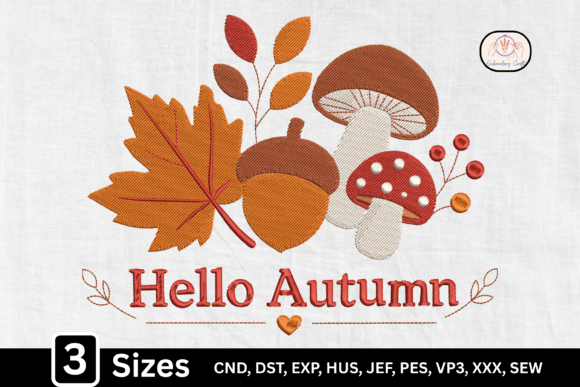
The first impression of Fall Mushroom Acorn Hello Autumn is undeniably warm. The composition balances organic shapes with legible typography, which is often the hardest balance to strike in seasonal embroidery. The mushroom and acorn elements provide a natural frame for the text without overwhelming it. For a craft business or Etsy seller, this visual hierarchy is crucial. You want the viewer to immediately understand the theme while still appreciating the intricate details of the foliage.
From a design perspective, the layout suggests versatility. It does not feel rigid or overly geometric, allowing it to conform naturally to various garment placements. Whether centered on a sweatshirt chest or positioned over the heart on a cardigan, the shape feels intentional rather than pasted on. This adaptability makes it a strong candidate for custom apparel lines where consistency across different sizes and garments is key to maintaining brand professionalism.
Real-World Application: The Canvas Tote Test
To truly judge the viability of this embroidery file, I mentally placed it in a specific production scenario: creating a premium canvas tote bag for a fall boutique collection. Tote bags are excellent test subjects because the fabric texture is visible, and the item receives heavy use. In this context, Fall Mushroom Acorn Hello Autumn needs to hold its own against the coarse weave of canvas.
If I were stitching this project, I would pay close attention to the interplay between the fill areas and the outline details. On a textured surface like canvas, fine running stitches can sometimes get lost. However, if the digitizer has accounted for this with appropriate pull compensation and stitch density, the mushrooms should pop with dimension. For a tote bag design, I also consider washability. Will the thread colors bleed? Is the stabilizer choice robust enough to prevent puckering after the bag is laundered? This design’s blend of solid fills and decorative accents suggests it would anchor well to medium-weight fabrics, provided you use a cut-away stabilizer to maintain structural integrity over time.
Apparel and Wearable Considerations
Moving beyond accessories, this design shows promise for sweatshirt embroidery and nursery items. For baby clothes or delicate knits, the concern shifts from durability to comfort. Heavy satin stitch borders can create stiff, scratchy edges against sensitive skin. When reviewing Fall Mushroom Acorn Hello Autumn for baby embroidery, I look for smooth transitions and minimal jump stitches. If the design relies heavily on dense fill stitch blocks, it may be too rigid for a onesie but perfect for a structured apron or pillow cover.
For adult apparel, the "Hello Autumn" lettering serves as a focal point. Legibility is paramount here. If the font is too ornate or the stitch width is too narrow, the text becomes unreadable from a distance. In my experience, designs that prioritize clear, bold lettering alongside illustrative elements tend to sell better as personalized gifts because they photograph well for social media and look professional in person.
Navigating Fabric Limitations and Stabilization
No digital embroidery file is universally compatible with every material. While Fall Mushroom Acorn Hello Autumn appears robust, there are specific scenarios where caution is necessary. Stretchy fabrics like ribbed knits or performance wear present challenges for any design featuring distinct registration points between text and graphics. If the fabric stretches during hooping but relaxes afterward, the alignment can shift, causing gaps between the acorns and the leaves.
- Textured Fabrics: On terry cloth or fleece, ensure the design includes an underlay foundation. Without it, the stitches may sink into the pile, obscuring the fine details of the mushroom caps.
- Dark Fabrics: Always test contrast. If the design uses muted earth tones, it may vanish on dark brown or navy backgrounds. You might need to adjust thread colors or add a light outline to define the edges.
- Sheer or Lightweight Materials: High stitch density can cause tearing or excessive puckering on voile or linen. Verify the density settings before committing to a holiday embroidery project on delicate table linens.
- Curved Surfaces: If adapting this for caps or curved sleeves, check the vertical height. Designs optimized for flat hoops often distort when wrapped around a cylinder unless specifically redigitized for 3D surfaces.
Commercial Value and Product Presentation
For small shop product owners and makers, the value of an embroidery design extends beyond the stitch-out. It encompasses how the design elevates the perceived value of the merchandise. Fall Mushroom Acorn Hello Autumn possesses a nostalgic quality that resonates with buyers seeking authentic, handmade aesthetics. This emotional connection drives sales more effectively than generic clip art.
When listing items featuring this design, your printable mockup and product photography should reflect the same cozy atmosphere. Because the design features natural elements, styling the finished product with dried flowers, wooden textures, or warm lighting enhances buyer engagement. Furthermore, if you offer commercial embroidery services, this motif works exceptionally well for corporate gifting or event branding during the autumn season, as it feels festive without being exclusively holiday-specific.
Protecting Your Business Assets
Before adding this to your catalog of design assets, verify the licensing terms. Understanding whether you can sell the physical embroidered item versus the digital file itself is non-negotiable for ethical business practices. Additionally, always confirm the included formats match your machine’s requirements. While most modern machines read standard files, older models may require specific conversions that could alter stitch paths.
Essential Pre-Stitch Checklist for Makers
Even the most beautifully digitized applique design or fill pattern requires validation. Based on my review of similar woodland themes, I recommend the following practical steps before launching Fall Mushroom Acorn Hello Autumn into production:
- Run a Physical Test: Never stitch directly onto a final product without a test run on similar scrap fabric. Check for registration issues between color changes.
- Audit Thread Colors: Screen colors are RGB; threads are physical dyes. Compare your selected palette against the actual spools to ensure the mushrooms and leaves have sufficient contrast against each other and the background.
- Evaluate Stabilizer Pairing: Match your stabilizer weight to the fabric and design density. A tear-away might suffice for towels, but a fusible poly-mesh is safer for stretchy apparel to prevent distortion.
- Check Small Details: Inspect tiny elements like acorn stems or leaf veins. If they are single running stitches, they may break easily. Consider widening them slightly in editing software if your machine struggles with fine detail.
- Mockup Variations: Create black and white previews to test value contrast. If the design looks muddy in grayscale, it lacks sufficient tonal variation and may need thread adjustments.
Ultimately, Fall Mushroom Acorn Hello Autumn represents a charming opportunity for autumn collections. Its success in your studio depends entirely on thoughtful execution. By respecting the technical requirements of stitch density, fabric compatibility, and proper stabilization, you transform a simple digital file into a lasting piece of textile art. Whether you are crafting a handmade product for a loved one or scaling up for a seasonal shop launch, treating this design with professional care ensures the final result is as beautiful in reality as it is in imagination.